
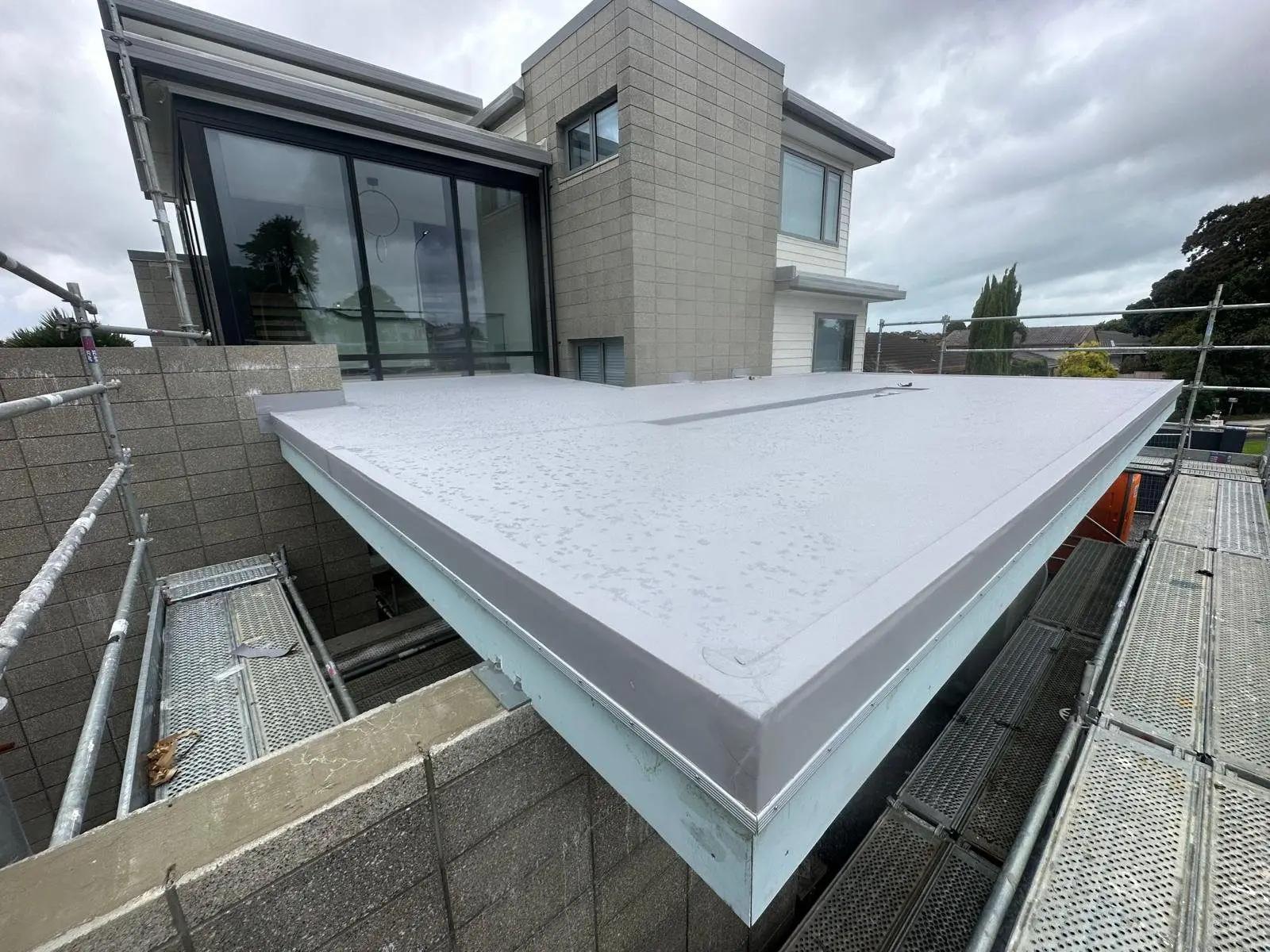
Auckland’s regular rain, high humidity and coastal exposure make effective waterproofing essential. A small defect can allow moisture into insulation, ceilings or timber framing, where damage may develop before a leak becomes visible inside.
Whether you are constructing a new home or maintaining an existing property, good waterproofing starts with the correct system, proper drainage and careful detailing at every junction.
The moisture challenges Auckland homes face
Auckland properties regularly contend with:
- Frequent rainfall: Roofs, decks and gutters must drain quickly during sustained or heavy rain.
- High humidity: Poor ventilation and cold surfaces can create condensation that is sometimes mistaken for a roof leak.
- Coastal exposure: Wind-driven rain and salt can accelerate deterioration in metal fixings, flashings and exposed materials.
- Low-pitch construction: Flat roofs and decks rely on continuous membranes and well-designed outlets rather than rapid runoff.
These conditions do not automatically cause leaks, but they expose weaknesses in unsuitable products, poor installation and neglected maintenance.
Areas that commonly need waterproofing
Flat and low-pitch roofs
These roofs need a continuous membrane because water moves off them slowly. Correct falls, clear outlets and an overflow are just as important as the membrane itself.
Decks and balconies
An occupied deck needs a system designed for its surface finish and foot traffic. Door thresholds, balustrade penetrations and wall junctions require particular care because they interrupt the waterproof layer.
Internal gutters
Internal gutters sit within the building footprint, so a failure sends water inside rather than safely over an external edge. They need sufficient capacity, reliable outlets and an overflow route.
Retaining walls and below-ground structures
Below-ground tanking keeps soil moisture away from walls and foundations. It must be installed before the area is backfilled and protected from damage during construction.
Parapets and penetrations
Parapet caps, vents, flues and pipes are frequent leak points. Durable details direct water over the waterproofing rather than relying only on exposed sealant.
Common waterproofing methods
The appropriate method depends on the location and substrate:
- TPO membrane uses hot-air welded seams to form a continuous, UV-resistant roof or deck surface.
- Torch-on membrane uses reinforced bituminous sheets and is suited to many roof and higher-traffic applications.
- Liquid-applied membrane cures into a seamless coating and can be useful for compatible substrates and complex details.
- Below-ground sheet or liquid tanking is designed for foundations, retaining walls and other earth-contact structures.
- Drainage and overflow design removes water before it can build up and overwhelm the waterproofing.
The system should always be selected for the actual application and installed according to the manufacturer’s specification.
How to maintain a waterproofing system
Waterproofing is low maintenance, but it is not maintenance-free. A few regular checks can prevent avoidable damage:
- Clear leaves and debris from roof outlets, gutters and overflows.
- Check visible seams, upstands and penetrations for lifting or movement.
- Avoid drilling through a membrane or adding equipment without suitable flashing.
- Investigate ponding water rather than accepting it as normal on a flat roof.
- Arrange an inspection after building work or when a new leak or stain appears.
When to request an inspection
Do not wait for water to drip through a ceiling. Discolouration, musty smells, blistering paint, soft deck areas and persistent ponding are all reasons to investigate.
Entire Roofing Solutions inspects and installs membrane waterproofing systems throughout Auckland. An early assessment can identify whether you need a targeted repair, drainage improvement or full replacement.