When we quote a flat roof we name the system we intend to use, and the two that come up most often are TPO and torch-on. Both are good. They suit different roofs.
TPO, in short
TPO is a single-ply sheet. The seams are joined with hot air, which fuses the material so the join is as strong as the sheet itself. There is no open flame at any point.
It suits most residential flat roofs, decks and balconies, and it is the obvious choice where there is timber framing nearby, where the building is occupied, or where a fire risk would complicate the job. It is light, it reflects heat, and walk-on grades take a turf, tile or timber finish over the top.
Torch-on, in short
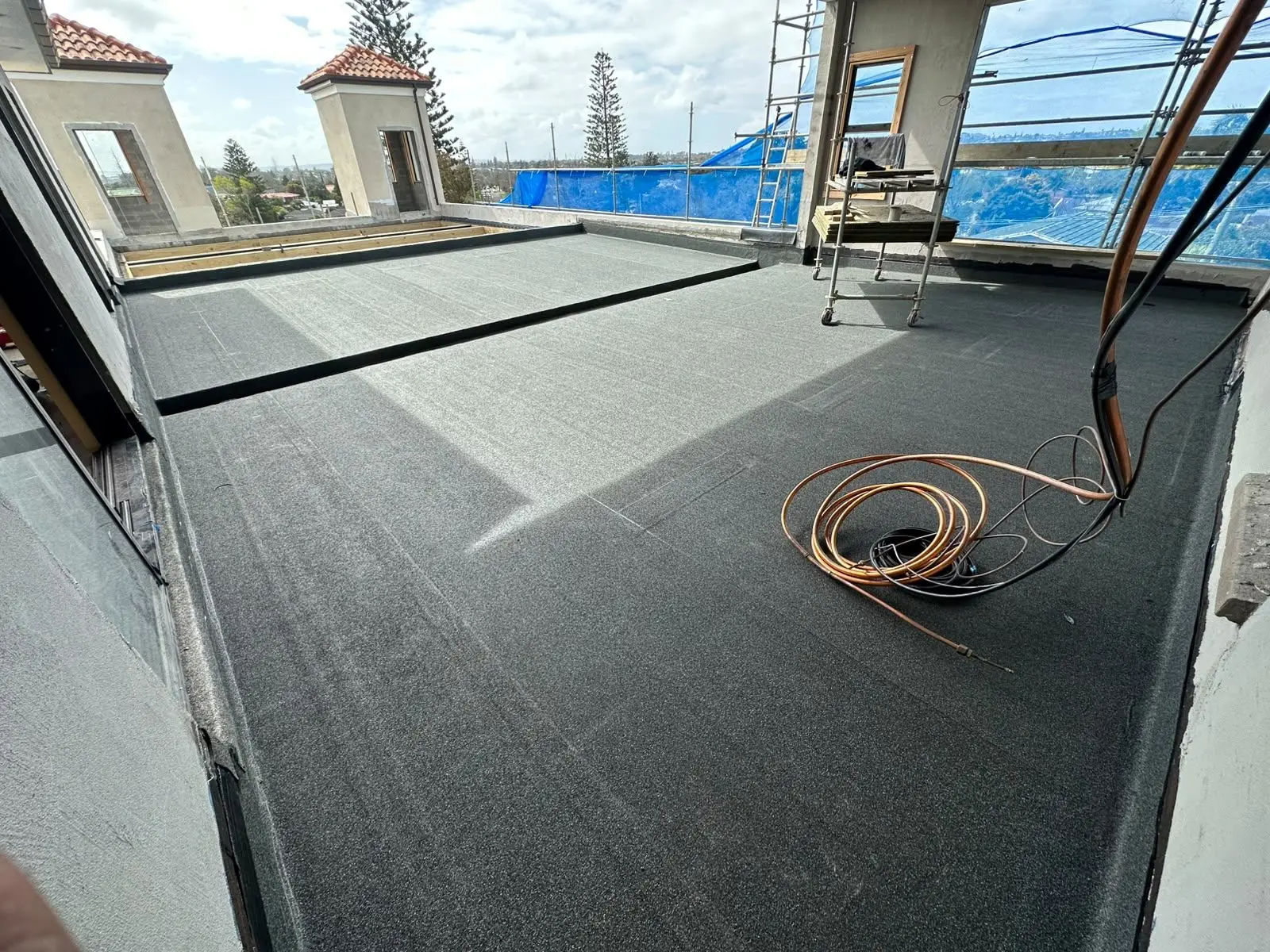
Torch-on is a bitumen-based sheet bonded with a gas torch. It is heavier and physically tougher, and it has a long track record on larger areas.
It suits commercial roofs, roofs that take foot traffic for plant maintenance, and situations where a more robust surface is wanted. It also handles complex substrates well.
How we actually choose
Four things decide it:
The substrate. Timber framing and a combustible build-up push us toward TPO. Concrete and larger commercial decks open up torch-on.
Fire risk and occupancy. An open flame over an occupied building, or near anything combustible, brings real constraints. TPO removes that question entirely.
How the space will be used. A deck people will walk on every day, with furniture and planters, gets a walk-on grade specification whichever system we use, but the finish build-up differs.
Size. On a large commercial roof, torch-on can be laid quickly and economically.
What does not decide it
What we happen to have on the truck. We are certified applicators for both, which is deliberate: it means the recommendation you get is based on your roof.
Whichever we use, the detailing is the same discipline, and that is what actually decides whether a flat roof lasts.
Want a straight recommendation for your roof? The inspection is free.